
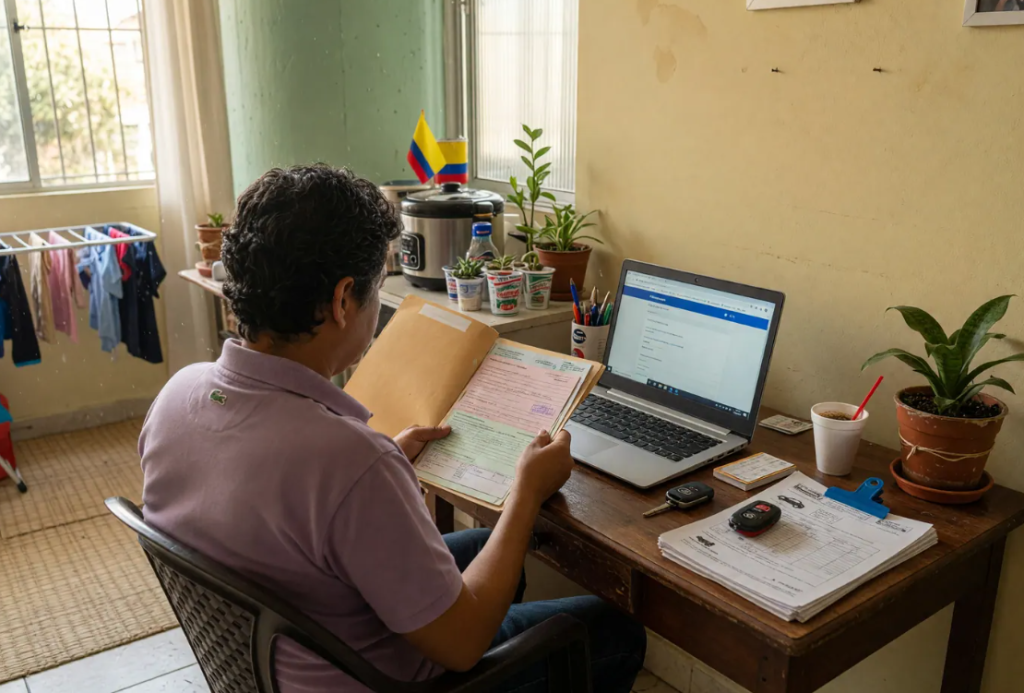
RUNT is Colombia’s Registro Único Nacional de Tránsito, the national database that holds the official legal record for every registered vehicle in the country. Checking a car by its plate number through RUNT shows whether it has pending fines, active liens (prendas), how many previous owners it has had, and whether it’s currently reported stolen. Anyone buying a used car, verifying their own vehicle’s status, or just settling a doubt before a family trip should know how to run this check.
What RUNT Actually Shows You
A RUNT lookup by plate number typically returns:
- Vehicle identification — make, model, year, and color as officially registered.
- Ownership history — the number of previous owners and transfer dates.
- Legal status — whether the vehicle is reported stolen or has any legal restriction.
- Liens (prendas) — whether the car is currently used as collateral for a loan.
- Traffic fines — outstanding SIMIT-linked infractions tied to that plate.
- SOAT and technical-mechanical review status — whether these mandatory documents are current.
This is the same category of information a dealership or a notary would check before finalizing a sale, so running it yourself before committing to a purchase puts you on equal footing with a professional buyer.
How to Check RUNT by Plate Number
Step 1: Have the plate number ready, written exactly as it appears on the vehicle. No spaces, and double-check for easily confused characters like «0» versus «O» or «1» versus «I.»
Step 2: Use a plate-lookup service. A free tool for checking https://runtporplacas.com.co/ lets you enter the plate directly and pulls the vehicle’s current legal and registration status without needing to create an account.
Step 3: Review the ownership and lien section carefully. A vehicle with an active lien can’t be legally transferred until that lien is released, which is one of the most common reasons a private sale falls through after the fact.
Step 4: Cross-check the fines section against SIMIT if the result shows anything pending. Some fines take a few days to sync between systems, so a very recent infraction might not appear immediately.
Step 5: Confirm SOAT and technical-mechanical review dates. Driving without a current SOAT is illegal in Colombia and carries its own penalties, independent of anything related to the vehicle’s sale.
Checking the Full Vehicle History
A basic plate check confirms the current status, but it doesn’t always show the complete story — every prior owner, every transfer date, and the full timeline of the vehicle’s registration. For that level of detail, the runt histórico vehicular gratis tool pulls the vehicle’s complete registered history, which is worth reviewing before a used-car purchase where the seller claims «only one owner» or a very clean history — the record will confirm it either way.
Why This Check Matters Before Buying a Used Car
Buying a car without checking RUNT first is one of the most common ways private buyers get stuck with someone else’s problem. A car with an unresolved lien, unpaid fines that transfer with the plate, or a mismatched VIN can turn a good deal into a legal headache that takes months to sort out. None of that information is visible just by looking at the car or taking it for a test drive — it only shows up in the official record.
Common Situations Where a RUNT Check Helps
Buying a used car from a private seller. Confirms ownership history, liens, and outstanding fines before any money changes hands.
Verifying your own vehicle before a road trip. Some regions perform random document checks, and confirming SOAT and technical review status in advance avoids a roadside surprise.
Settling a dispute over a shared or inherited vehicle. The ownership history section clarifies who is officially listed as the registered owner.
Checking a vehicle before renting it out or using it for a rideshare platform. Many platforms require a clean legal status and current documentation before approving a vehicle.
Common Mistakes When Checking RUNT
- Entering the plate with spaces or incorrect formatting. Most tools expect the plate exactly as printed, without spaces or dashes.
- Assuming no fines means the transaction is fully safe. Liens and legal restrictions matter just as much as fines, and are easy to overlook if you only scan the top of the results.
- Not rechecking closer to the purchase date. A vehicle’s status can change in the days between an initial check and the actual sale, especially if a fine posts or a lien is registered in the meantime.
- Confusing SOAT status with vehicle ownership status. These are separate records, and a valid SOAT doesn’t mean the vehicle is free of other legal issues.
FAQs
Is checking RUNT by plate number free? Yes, basic plate lookups are free and don’t require creating an account.
What does it mean if a vehicle has an active lien? It means the car is currently used as collateral for a loan and can’t be legally transferred to a new owner until the lien is released.
How current is the fine information shown in a RUNT check? Most fines appear within a few days of being issued, though very recent infractions may take slightly longer to sync.
Can I check a vehicle’s full ownership history, not just its current status? Yes, a dedicated vehicle history lookup shows the complete registered timeline, including all prior owners and transfer dates.
Why would a seller’s claim of «one owner» not match the RUNT record? Sometimes sellers are unaware of a prior registered transfer, or the claim is simply inaccurate — the official record settles the question either way.
Final Thoughts
A RUNT check by plate number takes a couple of minutes and can save a buyer from months of legal complications tied to liens, unpaid fines, or a mismatched ownership history. Whether you’re buying, selling, or just confirming your own vehicle’s status, running this check before any money changes hands is one of the simplest ways to protect yourself in a private vehicle transaction.